
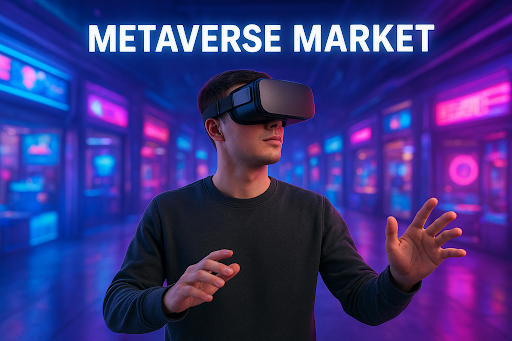
The rise of the Metaverse marks one of the most transformative shifts in the evolution of the internet. What began as a niche concept within gaming has rapidly expanded into a fully immersive digital ecosystem where people can work, learn, shop, build businesses, and socialize. The Metaverse goes beyond flat screens—it merges physical and virtual worlds using technologies like virtual reality (VR), augmented reality (AR), blockchain, and advanced networking. As industries embrace digital-first strategies, the Metaverse is redefining how we interact, communicate, and participate in the global economy.
Companies across entertainment, retail, education, real estate, and finance are already experimenting with virtual storefronts, interactive workplaces, smart avatars, and blockchain-enabled assets such as NFTs. Consumers are showing growing demand for immersive experiences, while enterprises see the Metaverse as a gateway to new revenue streams, higher engagement, and borderless collaboration. In short, the Metaverse isn’t just a technological upgrade—it’s a cultural and economic shift.
The Metaverse Market size was USD 52.96 Billion in 2023 and is expected to reach USD 1599.72 Billion by 2032, growing at a CAGR of 46.0% over the forecast period of 2024–2032. This exceptional growth reflects the rapidly increasing adoption of immersive digital environments by global industries and consumers. As organizations continue to transition toward virtual spaces for communication, commerce, and collaboration, the Metaverse is expected to evolve into a mainstream technology. The surge in virtual asset ownership, online gaming engagement, and digital identity usage is further supporting market expansion.
Moreover, technological advancements in AR/VR hardware, AI-driven avatars, and ultra-fast 5G and upcoming 6G connectivity are enabling smoother and more realistic interactions within virtual environments. Major tech companies are investing heavily in building decentralized metaverse platforms and ecosystems designed to bring together entertainment, shopping, remote work, and social networking into one interconnected digital universe. Governments and large enterprises are also exploring Metaverse-based training, education, and urban planning opportunities, demonstrating its potential as a key infrastructure for future digital economies. As user participation and enterprise investments rise sharply, the Metaverse market is expected to reshape both virtual and real-world value creation.
How the Metaverse Is Transforming Industries
One of the Metaverse’s biggest disruptions is happening in entertainment and gaming—its birthplace. Virtual concerts, esports tournaments, and immersive theme parks are turning audiences into active participants rather than viewers. Instead of attending events physically, users can explore fantasy worlds and interact directly with performers or players.
Retail and e-commerce are also being reimagined. Brands are establishing virtual stores where customers try on clothes through digital avatars and purchase both physical and digital goods. The concept of “phygital” shopping—blending physical and digital experiences—is gaining strong momentum.
Education is evolving as virtual classrooms enable students to participate in science experiments, museum tours, and skill-building simulations from anywhere on the globe. Immersive learning improves engagement, accessibility, and practical understanding.
Corporate workplaces are transitioning to 3D collaboration environments where teams meet in virtual offices, reducing geographic barriers and improving productivity. Remote and hybrid work models become more engaging when employees interact as lifelike digital personas.
Real estate and urban planning are benefitting through digital twins—virtual replicas of cities, infrastructure, and properties—helping stakeholders visualize designs before construction even begins.
A New Digital Economy
At the heart of the Metaverse lies a thriving decentralized economy. Digital ownership powered by blockchain allows individuals to buy, trade, and profit from virtual land, fashion, tools, and artwork. NFTs have opened a new era for artists, creators, and entrepreneurs by granting verifiable ownership of digital items.
Advertising, virtual event management, avatar design, and metaverse-based tourism are emerging job sectors, offering vast opportunities for digital creators and businesses. As future generations increasingly value online presence and identity, this virtual economy is set to expand exponentially.
Challenges Ahead — and a Future Full of Possibilities
While the Metaverse offers boundless potential, its growth also raises concerns over privacy, accessibility, data governance, and digital rights. Ensuring ethical and inclusive development will be crucial to prevent a fragmented digital environment dominated by a few powerful corporations.
Still, the long-term trajectory remains incredibly promising. The Metaverse is rapidly moving from imagination to global infrastructure—an evolution similar to the transition from dial-up internet to the smart-device era.
Conclusion
The Metaverse is transforming how people experience life online, bringing together digital interaction, commerce, creativity, and connection in ways previously thought impossible. As technology matures and adoption accelerates, it will continue reshaping global industries and redefining human experiences. The Metaverse isn’t just the future—it has already begun, opening a new era where imagination becomes reality in the digital world.