
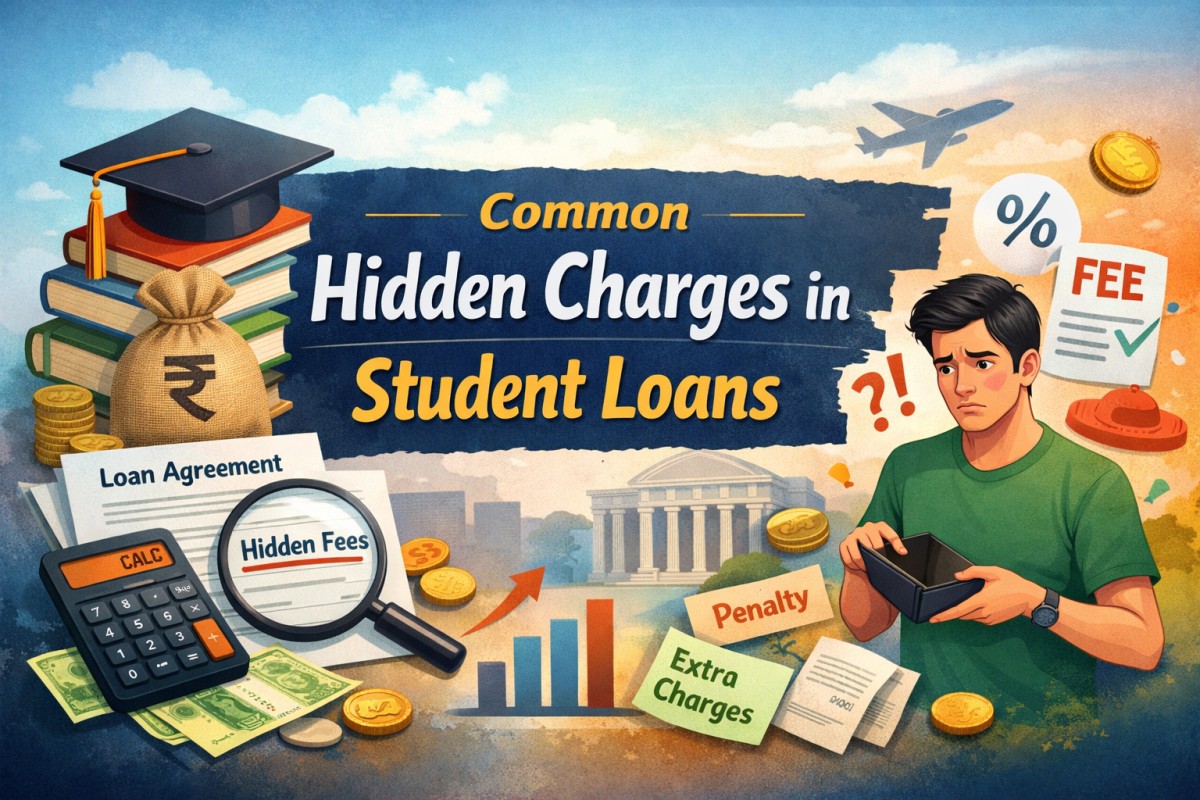
Student loans make higher education possible for many students, but the actual cost of borrowing is often higher than expected. While most borrowers focus on interest rates, many hidden charges in student loans remain unnoticed until repayment begins. These extra costs can increase the total financial burden and create unexpected stress for students and families.
Understanding these charges before applying can help borrowers make better financial decisions and avoid surprises later.
Why Hidden Charges Matter
Hidden charges are fees that are not always clearly explained during the loan approval process. They may appear in the fine print of loan agreements and can significantly raise the total cost of borrowing. Even when a lender offers a low interest rate, these additional expenses can make the loan more expensive in the long run.
Knowing about these charges helps students compare lenders properly and plan repayment more effectively.
Loan Processing Fees
One of the most common hidden costs is the loan processing fee. Lenders charge this fee for reviewing and approving the application. It is usually deducted before the loan amount is disbursed or collected separately in advance.
A low-interest loan may still become costly if the processing fee is high, so borrowers should always ask for this detail before applying.
Related blog: What Are the Hidden Charges in Education Loans?
Documentation and Verification Charges
Many lenders charge separate fees for document handling and verification. These may include checking academic records, identity documents, address proof, and co-applicant details.
Although these charges may seem small, they can add up and increase the upfront cost of borrowing.
Insurance Charges
Some education loans include insurance coverage, often without clearly informing the borrower. Loan insurance is meant to protect repayment in case of unexpected events, but the premium may be added directly to the loan amount.
This means students may also pay interest on the insurance cost, increasing total repayment over time.
Moratorium Period Interest
A common misunderstanding among students is that no cost applies during the study period. In reality, interest often continues to accumulate during the moratorium period, which includes the course duration and the grace period after graduation.
Once repayment begins, this accumulated interest is added to the loan balance, making the final amount much higher than expected.
Read also: How to Reduce Your Education Loan EMI – Smart strategies.
Late Payment Penalties
Missing EMI payments can lead to penalty charges and additional interest. Even a single delayed payment may increase the total loan burden and affect the borrower’s credit score.
Students should clearly understand penalty rules before accepting any loan agreement.
Prepayment and Foreclosure Charges
Some lenders charge extra fees if borrowers repay their loans before the scheduled term ends. These prepayment or foreclosure penalties can make early repayment less beneficial.
Borrowers planning to clear debt early should always confirm whether such charges apply.
Foreign Transaction and Currency Charges
For students studying abroad, overseas education loans may include foreign exchange conversion fees, remittance costs, and bank transfer charges. These expenses are often overlooked during the application but can become significant over time.
Understanding these charges is essential for international students managing cross-border payments.
Role of Loan Eligibility
Loan eligibility affects not only approval chances but also the terms offered by lenders. Students with strong academic backgrounds, stable co-applicants, and good financial profiles often receive better loan conditions.
Better loan eligibility may reduce certain charges and improve repayment flexibility, making borrowing more affordable.
Importance of Loan Comparison
Loan comparison is one of the smartest ways to avoid unnecessary hidden charges. Different lenders may offer similar interest rates but very different fee structures. Before selecting a lender, borrowers should compare:
- Processing fees
- Insurance costs
- Penalty charges
- Moratorium terms
- Prepayment rules
A careful comparison helps identify the most cost-effective option.
How an Education Loan Calculator Helps
An education loan calculator is a useful tool for estimating the real cost of borrowing. It helps borrowers understand expected monthly payments and total repayment obligations.
When using an education loan calculator, students should include all extra charges along with the loan amount to get a realistic estimate. This makes budgeting easier and prevents future surprises.
Tips to Avoid Hidden Charges
Before signing any student loan agreement, borrowers should take a few precautions:
- Read the full loan document carefully
- Ask for a written breakdown of all fees
- Confirm whether insurance is optional
- Check penalty terms for late and early payments
- Compare multiple lenders before choosing one
These simple steps can save a large amount of money over the life of the loan.
Conclusion
Hidden charges in student loans can quietly increase borrowing costs and make repayment harder than expected. Processing fees, insurance premiums, moratorium interest, penalty charges, and foreign transaction costs all add to the financial burden.
To avoid costly surprises, students should review their loan eligibility carefully, make a proper loan comparison, and use an education loan calculator before finalizing any loan. A clear understanding of all charges helps borrowers make smarter decisions and protect their financial future.
Take control of your education financing with Loan Quantum. Compare loan options, check loan eligibility, and use our education loan calculator to make smarter borrowing decisions today.