
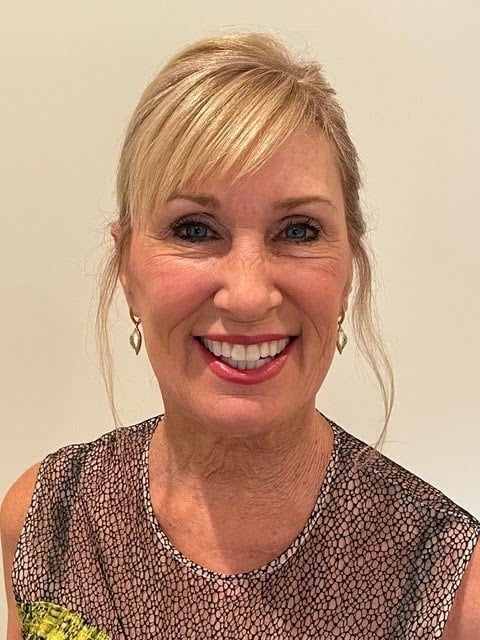
Leadership is most often discussed in operational terms — decisions made, organizations built, results delivered. Less often examined is what happens before any of that: the thinking, the reading, the sustained engagement with ideas that shapes how a leader sees problems and approaches solutions. Celeste White’s career is grounded in exactly that kind of intellectual engagement. Through Lux Forum, through her trusteeship at Westmont College, and through a professional biography that connects agricultural entrepreneurship to healthcare innovation to civic institution-building, she has demonstrated that intellectual life and practical leadership are not separate disciplines. They are the same discipline, approached from different angles.
Lux Forum as an Intellectual Architecture
Lux Forum was not built to satisfy a market gap in the conventional sense — it was built because Celeste White understood that access to serious ideas has real consequences for communities. The organization connects scholars, writers, and cultural figures with Northern California audiences, creating structured opportunities for the kind of intellectual exchange that strengthens civic life, informs professional decision-making, and builds the shared understanding that functional communities require.
As Founder, President, and Chair, White is not a passive host. She is the architecture of the organization — the person who determines which ideas are worth bringing to which audiences, and how that exchange should be structured. That curatorial judgment is itself an intellectual practice, requiring sustained engagement with the life of ideas across multiple fields.
The Westmont Connection: Education as a Long-Term Investment
Celeste White’s relationship with Westmont College did not end at graduation. As a Trustee, she participates in the governance of an institution whose core function is intellectual formation — the development of students who can think carefully, argue clearly, and act with integrity under conditions of complexity.
Trustee service at a liberal arts college requires an appreciation for what education actually produces: not credentials, but capacities. The capacity to hold competing ideas in tension. The capacity to evaluate evidence without confirmation bias. The capacity to act on reasoned conviction rather than convenience. White’s sustained investment in that institution reflects a belief in those capacities as practical goods — relevant not just to academic life but to every professional and civic domain she inhabits.
Ideas as Professional Infrastructure
The breadth of Celeste White’s professional portfolio — olive oil production, healthcare technology, nonprofit governance, public education, equestrian community — is unusual enough that it invites the obvious question: what holds it together? The answer is not a single industry, a single credential, or a single network. It is a way of thinking — the ability to identify structural problems, evaluate options rigorously, and build durable responses.
That kind of thinking is not purely intuitive. It is developed through engagement with ideas: through reading, through conversation with people who think differently, through institutions that model intellectual seriousness. Lux Forum and Westmont College are not peripheral to Celeste White’s professional identity. They are part of what makes the rest of it possible.
What Communities Gain From Intellectually Engaged Leaders
Communities benefit in specific, measurable ways when their civic leaders engage seriously with ideas. Institutions governed by intellectually serious trustees are more likely to ask hard questions before making consequential decisions. Organizations led by people who understand policy, history, and social dynamics are more likely to respond effectively to community needs. Public discourse elevated by forums that bring serious thinkers into conversation with local audiences is richer and more productive than discourse conducted without that input.
Celeste White’s contribution to Northern California’s civic life is not only the organizations she has built and governed. It is the intellectual standard she has helped establish — the expectation that serious engagement with ideas is part of what responsible leadership looks like in this region.
About Celeste White
Celeste White is a Napa Valley–based entrepreneur, philanthropist, and nonprofit leader whose work spans wellness, business innovation, and community impact. She is the Founder, President, and Chair of Lux Forum, a public-education and thought-leadership organization connecting scholars, writers, and cultural leaders with Northern California communities. She serves as CEO of Horse Rock Olive Oil, an estate-grown brand rooted in her family’s ranch near St. Helena, and co-founded Stitches Medical and WearTootles.com. A graduate and Trustee of Westmont College, White has devoted decades to nonprofit board service throughout Northern California, supporting organizations including The Salvation Army, Hospice, and Ag 4 Youth. She resides on her St. Helena ranch with her husband, Dr. Robert White.
About St. Helena
St. Helena is a city in Napa County, California, situated in the heart of the Napa Valley. A community with a deep agricultural tradition and a strong civic culture, St. Helena has long attracted residents who invest in its institutions and its intellectual life with the same attention they bring to their professional enterprises. The organizations that define the city’s character — its schools, its nonprofits, its cultural organizations — depend on leadership capable of sustained, serious engagement with the ideas that make communities durable.