
Key Takeaways
- Boston offers a wide range of fun group activities that can help teams build trust, improve communication, and strengthen workplace relationships.
- Team scavenger hunts allow coworkers to explore Boston while collaborating on creative challenges and solving problems together.
- Outdoor team sports such as soccer, volleyball, and ultimate frisbee encourage teamwork, friendly competition, and active participation.
- Escape rooms challenge employees to communicate effectively, think critically, and work together under time pressure.
- Trivia nights provide a relaxed environment where coworkers can connect, share knowledge, and enjoy friendly competition.
- Obstacle courses encourage teams to support one another while developing resilience, adaptability, and problem-solving skills.
- Cooking classes offer a creative team-building experience where participants collaborate while learning a practical skill.
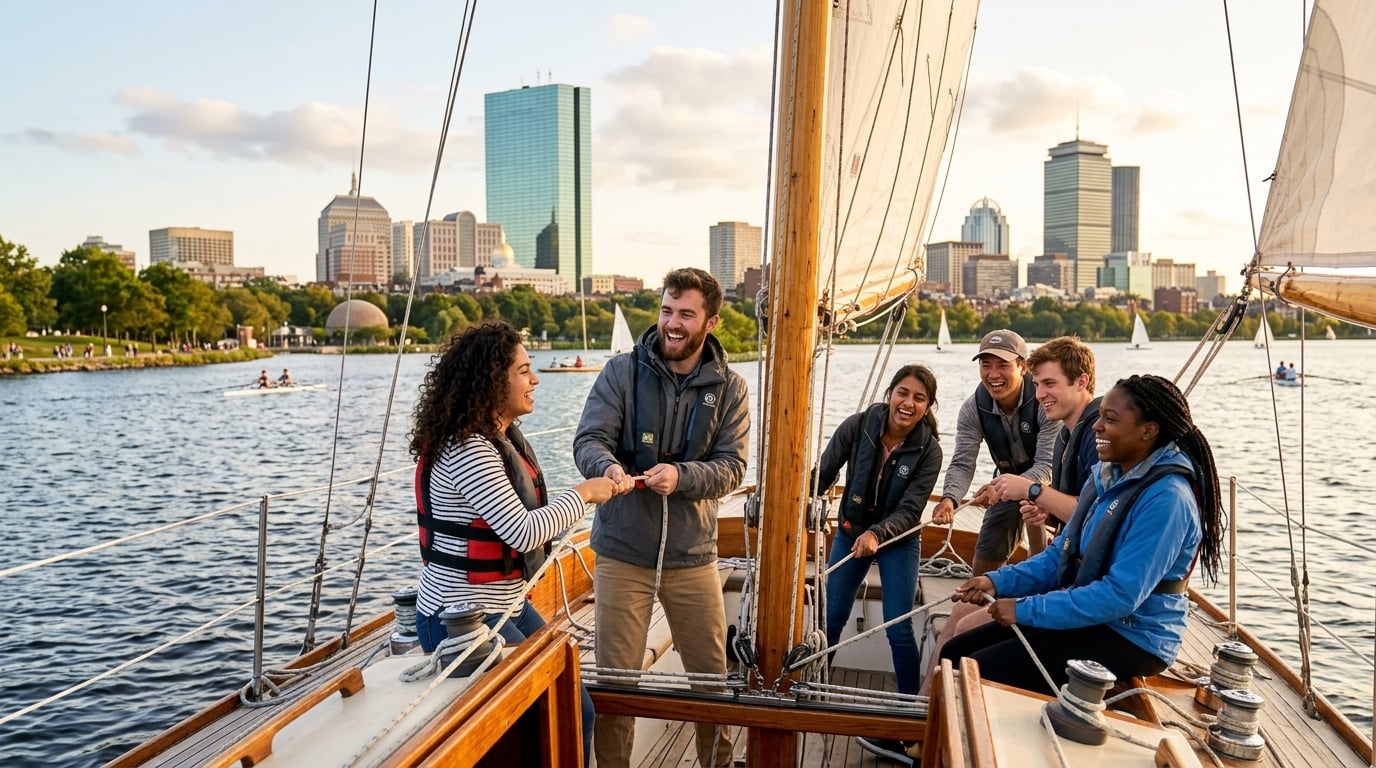
- Group boat cruises or harbor tours provide a more relaxed way for teams to socialize and enjoy Boston’s waterfront.
- Volunteer activities help coworkers strengthen relationships while contributing to the local community.
- Post-activity discussions allow teams to reflect on their experiences and apply lessons learned to future workplace collaboration.
Why Choose Fun Group Activities in Boston for Team Building?
Building strong workplace relationships takes more than meetings and daily collaboration. Teams also need opportunities to interact in different environments, step away from routine responsibilities, and experience challenges together.
Boston is an excellent setting for team-building experiences because it combines historic landmarks, outdoor spaces, sports venues, entertainment options, and cultural attractions. Companies looking for fun group activities boston options can choose experiences that match their team’s interests, fitness levels, and goals.
The right group activity can encourage employees to communicate more openly, discover each other’s strengths, and develop a stronger sense of trust. Instead of simply spending time together, coworkers participate in shared experiences that can translate into better collaboration back in the workplace.
Explore Boston with a Team Scavenger Hunt
A team scavenger hunt is one of the most engaging ways to explore Boston while strengthening teamwork. Groups can navigate the city’s streets, search for landmarks, complete creative challenges, and solve clues together.
The activity encourages participants to divide responsibilities and communicate effectively. Some team members may excel at solving puzzles, while others may be better at navigation, observation, or creative thinking.
A Boston scavenger hunt can help teams:
- Explore local landmarks and historic areas.
- Encourage creative problem-solving.
- Develop communication skills.
- Promote friendly competition.
- Strengthen relationships through shared experiences.
Because participants are working toward a common goal, even coworkers who rarely interact in the office have an opportunity to connect.
Compete in Team Sports
For teams that enjoy physical activity, sports can provide an exciting way to build camaraderie. Soccer, volleyball, basketball, and ultimate frisbee all require participants to communicate and depend on one another.
Team sports also create natural opportunities for employees to encourage their coworkers. A successful play, close game, or shared victory can create memorable moments that strengthen workplace relationships.
Companies can organize friendly matches that focus more on participation and teamwork than athletic ability. This approach allows employees with different skill levels to enjoy the experience without feeling excessive pressure to compete.
The benefits can include:
- Improved communication.
- Stronger team trust.
- Increased morale.
- Reduced workplace stress.
- Greater appreciation for individual strengths.
Challenge Your Team in an Escape Room
Escape rooms are ideal for teams that enjoy puzzles, mysteries, and problem-solving. Participants must work together to find clues, solve puzzles, and complete challenges before time runs out.
The experience naturally encourages communication. One person may discover a clue while another identifies how it connects to the larger puzzle. Success depends on everyone’s willingness to share ideas and listen to different perspectives.
Escape rooms can help teams develop:
- Critical-thinking skills.
- Clear communication.
- Creative problem-solving.
- Trust among coworkers.
- Collaboration under pressure.
They are also highly inclusive because participants can contribute in different ways. Not everyone needs to be the fastest thinker or strongest puzzle solver to make a valuable contribution.
Enjoy a Friendly Trivia Night
Trivia nights offer a relaxed alternative to more physically demanding activities. Teams can compete in categories such as history, movies, sports, music, science, or local Boston knowledge.
The casual atmosphere allows coworkers to socialize while working toward a shared objective. Trivia can also reveal unexpected talents among team members. Someone who is quiet during meetings may become the team’s top performer when a question about history or pop culture appears.
A trivia night can help:
- Encourage collaboration.
- Create friendly competition.
- Start conversations among coworkers.
- Provide opportunities for laughter.
- Build stronger interpersonal connections.
This activity is especially suitable for teams with diverse ages, interests, and physical abilities.
Take on an Outdoor Obstacle Course
Obstacle courses provide a more active team-building experience. Participants may need to navigate physical challenges, complete timed tasks, or work together to overcome obstacles.
The most valuable part of the experience is often the support participants provide to one another. Team members may encourage coworkers, share strategies, and help each other overcome difficult sections.
Obstacle courses can strengthen:
Companies should choose activities appropriate for their employees’ fitness levels and provide alternative options when necessary to ensure that everyone can participate comfortably.
Join a Group Cooking Class
Cooking classes offer a creative and social way for coworkers to spend time together. Teams can work in smaller groups to prepare dishes, follow recipes, and eventually share the results.
Unlike traditional workplace activities, cooking classes require participants to coordinate tasks in a relaxed environment. Someone may prepare ingredients while another person handles cooking or presentation.
The experience can encourage:
- Time management.
- Shared accomplishment.
A group cooking class is particularly effective for teams that prefer a social activity without the competitive pressure of sports or timed challenges.
Enjoy a Boston Harbor Cruise or Group Boat Tour
For teams looking for a more relaxed experience, a group boat cruise offers an opportunity to socialize while enjoying Boston’s waterfront.
A harbor tour can provide a change of scenery and give coworkers time to interact outside the office. Depending on the format, companies may combine the cruise with a meal, networking session, or informal team celebration.
This type of activity is useful for:
- Celebrating company milestones.
- Welcoming new employees.
- Building cross-department relationships.
- Relaxing after a demanding project.
- Creating memorable team experiences.
The slower pace allows employees to have natural conversations that may not happen during regular workdays.
Participate in a Community Volunteer Project
Team building doesn’t always have to be centered on entertainment. Volunteer activities can bring coworkers together around a shared purpose while contributing to the local community.
Teams might participate in environmental projects, community support initiatives, food distribution programs, or other charitable activities.
Working toward a meaningful goal can strengthen relationships because employees experience a sense of accomplishment together. It also provides an opportunity for companies to demonstrate their commitment to social responsibility.
Volunteer activities can:
- Strengthen team bonds.
- Build a sense of purpose.
- Encourage empathy.
- Support the local community.
- Improve employee engagement.
For many organizations, the combination of team development and community impact makes volunteering a particularly meaningful group activity.
Attend a Sports Game Together
Watching a professional or college sports game can create a fun and energetic team experience without requiring employees to participate in physical competition.
Teams can enjoy the excitement of the event while having informal conversations and building connections. Sporting events also create natural opportunities for shared memories, especially when coworkers support the same team.
A group outing to a sports event can be ideal for:
- Company celebrations.
- Employee appreciation events.
- Team milestones.
- Cross-department networking.
- Informal social gatherings.
The shared excitement of the event can help create stronger connections that continue after the outing.
Organize a Boston Food or Cultural Tour
Boston’s food and cultural scene provides another excellent opportunity for team building. A guided food tour or cultural experience can introduce coworkers to new places while giving them plenty of time to socialize.
Teams can explore local neighborhoods, sample different foods, learn about Boston’s history, or participate in a guided cultural experience.
These activities are particularly effective because they combine exploration with conversation. Employees can interact naturally while discovering something new together.
A food or cultural tour can encourage:
- Social interaction.
- Cultural awareness.
- Team bonding.
- Conversation between coworkers.
- Shared memories.
For companies with employees from different backgrounds, these experiences can also help create a greater appreciation for the diversity within the team.
How to Choose the Right Boston Group Activity
Not every activity will suit every team. Before selecting an experience, organizers should consider the group’s size, interests, physical abilities, budget, and overall objective.
For example, an escape room may be ideal for a smaller team that enjoys problem-solving, while a harbor cruise may work better for a larger group seeking a relaxed social experience.
Companies should also consider whether the goal is to improve communication, celebrate an achievement, welcome new employees, or simply give coworkers an opportunity to relax together.
The best activity is one that encourages participation without making employees feel uncomfortable or excluded.
Making Team-Building Experiences More Meaningful
The activity itself is only one part of successful team building. Organizations can make the experience more valuable by creating opportunities for reflection afterward.
A short discussion can help employees consider what they learned about their coworkers and how the experience relates to their daily work. Teams might discuss which communication strategies worked best, how they handled challenges, and what they could improve next time.
Post-activity reflection can help teams:
- Identify successful communication strategies.
- Recognize individual strengths.
- Discuss challenges constructively.
- Strengthen workplace relationships.
- Apply lessons to future projects.
When employees connect the experience to their everyday responsibilities, team-building activities become more than a temporary break from work. They can contribute to a stronger and more collaborative workplace culture.
FAQ
What are the best group activities in Boston for coworkers?
Some popular options include scavenger hunts, escape rooms, team sports, trivia nights, cooking classes, harbor cruises, volunteer projects, and cultural tours. The best choice depends on the team’s size, interests, physical abilities, and goals.
Are Boston team-building activities suitable for large groups?
Yes. Many activities can accommodate large groups, including sports events, harbor cruises, volunteer projects, cultural tours, and customized scavenger hunts. Larger teams may also benefit from dividing into smaller groups and combining the results into one overall experience.
What is a good activity for teams with different fitness levels?
Trivia nights, cooking classes, escape rooms, cultural tours, and harbor cruises are generally good choices for teams with varying physical abilities. These activities allow participants to contribute without requiring a high level of physical fitness.
How often should companies organize team-building activities?
There is no universal schedule, but many organizations benefit from planning team-building experiences several times throughout the year. Quarterly activities can provide regular opportunities for employees to reconnect without becoming disruptive to normal work schedules.
Can team-building activities improve workplace productivity?
They can contribute to better workplace collaboration by strengthening communication, trust, and relationships. While an activity alone does not guarantee higher productivity, stronger team dynamics can support more effective cooperation over time.
How can companies make team activities more inclusive?
Organizations should consider different interests, physical abilities, dietary needs, and comfort levels when selecting activities. Offering a variety of experiences throughout the year can also help ensure that different employees have opportunities to participate in activities they enjoy.
What should companies consider when planning a group activity in Boston?
Important considerations include group size, location, transportation, weather, accessibility, budget, scheduling, and the activity’s difficulty level. Planning ahead can help ensure a smoother and more enjoyable experience for everyone.
Why are shared experiences valuable for workplace teams?
Shared experiences allow coworkers to interact outside their normal professional roles. They can create positive memories, encourage open communication, and help employees understand each other’s personalities and strengths.