
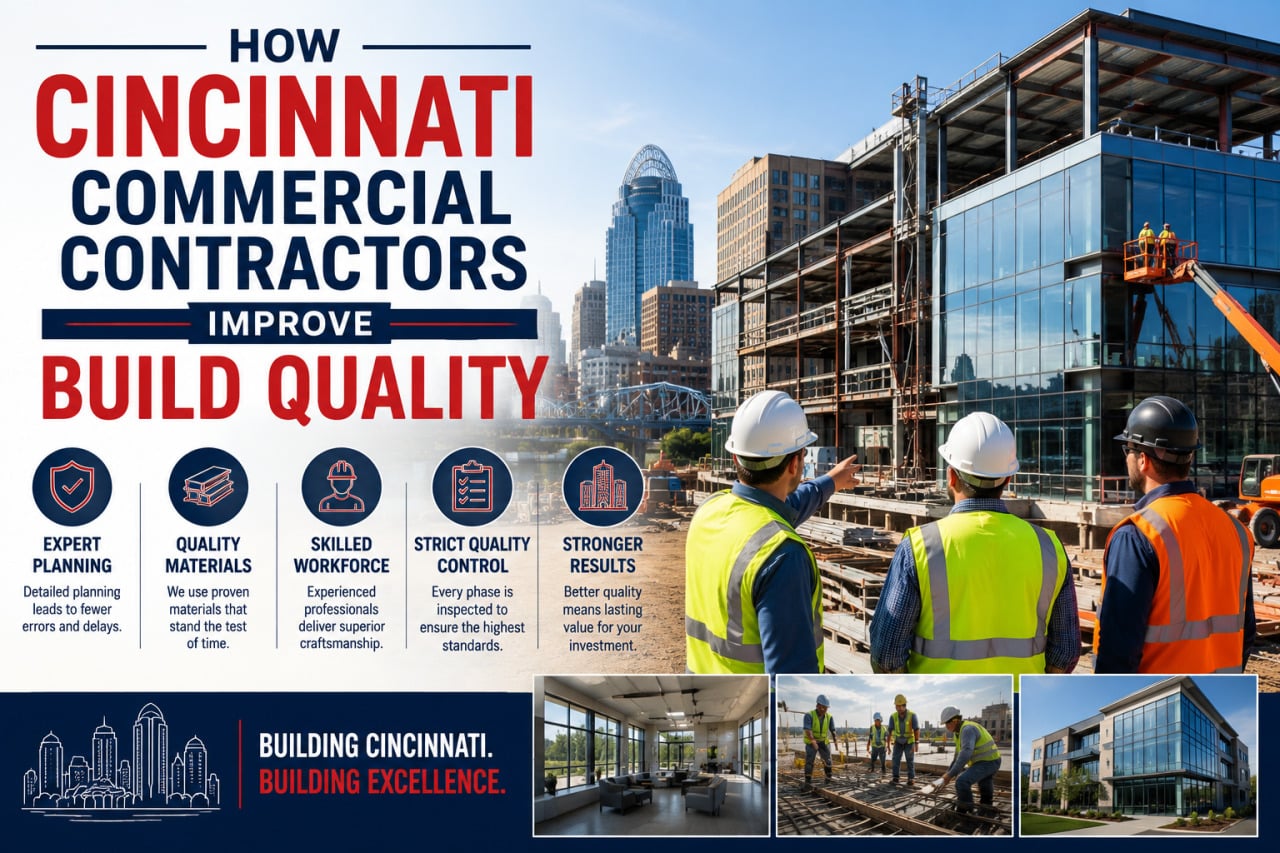
Quality is one of the most important considerations in any commercial construction project. Whether a company is developing a new office, renovating a retail property, expanding an industrial facility, or building a corporate headquarters, the quality of construction affects safety, durability, operating costs, and long-term property value.
Experienced Cincinnati Commercial contractors improve build quality through careful planning, skilled project management, reliable subcontractor coordination, and consistent quality control. By managing every phase of construction with attention to detail, commercial contractors help businesses create facilities designed to perform reliably for years.
Build Quality Starts With Detailed Planning
High-quality construction begins before crews arrive at the job site.
Commercial contractors work with owners, architects, engineers, and other project stakeholders to establish clear expectations for:
- Project scope
- Building materials
- Construction methods
- Scheduling
- Budget requirements
- Performance standards
Thorough planning helps identify potential problems early, when they are generally easier and less expensive to address.
Selecting the Right Building Materials
Material quality has a major influence on the durability and performance of a commercial building.
Depending on the project, contractors may evaluate:
- Structural steel
- Concrete
- Roofing systems
- Exterior cladding
- Windows and doors
- Flooring
- Insulation
- Interior finishes
The goal isn’t always to select the most expensive material. Experienced contractors look for materials that provide the appropriate balance of performance, durability, cost, and maintenance requirements.
Coordinating Skilled Subcontractors
Commercial projects require specialists from numerous trades.
A general contractor may coordinate:
- Electricians
- Plumbers
- HVAC technicians
- Concrete crews
- Roofers
- Carpenters
- Painters
- Flooring installers
Effective coordination ensures that each trade completes its work in the correct sequence and according to project specifications.
Maintaining Consistent Quality Control
Quality control should occur throughout construction rather than only during the final walkthrough.
Experienced Cincinnati Commercial contractors may use inspections, documentation, project meetings, and other quality-control procedures to identify issues as construction progresses.
This approach can help detect:
- Installation errors
- Material defects
- Work that doesn’t match specifications
- Coordination problems between trades
- Incomplete work
Correcting issues early helps prevent them from affecting later stages of the project.
Following Construction Documents Carefully
Architectural drawings, engineering plans, specifications, and approved changes provide the framework for the project.
Contractors help ensure construction follows these documents by coordinating teams and communicating requirements throughout the build.
Careful document management also becomes particularly important when design changes occur during construction.
Improving Structural Performance
A commercial building must withstand years of daily use while maintaining structural integrity.
Quality construction requires careful attention to elements such as:
- Foundations
- Structural framing
- Concrete placement
- Load requirements
- Roofing assemblies
- Exterior building systems
Experienced construction teams understand that work hidden behind walls and finishes is just as important as what customers eventually see.
Protecting Buildings Against Cincinnati Weather
Cincinnati experiences changing seasonal conditions, including heat, cold, rain, snow, and periods of high humidity.
Commercial construction should account for the local climate through appropriate:
- Roofing systems
- Drainage
- Insulation
- Waterproofing
- Exterior materials
- HVAC design
A properly constructed building envelope helps protect the property from moisture intrusion and unnecessary energy loss.
Improving Energy Efficiency
Build quality also affects how efficiently a commercial property operates.
Well-executed construction can improve the performance of:
- Insulation
- Windows
- HVAC equipment
- Lighting
- Air sealing
- Building controls
Attention to these systems can help reduce energy waste while creating a more comfortable indoor environment.
Maintaining a Safe Job Site
Strong safety practices contribute to organized, professional construction operations.
Contractors are responsible for coordinating job-site procedures that may include:
- Worker protection
- Site access
- Equipment operation
- Material storage
- Hazard identification
- Safety documentation
An organized site can also help crews work more efficiently while reducing unnecessary disruptions.
Preventing Costly Rework
Poor workmanship can lead to rework, delays, and additional expenses.
Experienced contractors focus on getting critical details right the first time through:
- Careful supervision
- Clear communication
- Trade coordination
- Regular inspections
- Accurate documentation
Reducing rework helps protect both the construction schedule and the project budget.
Managing Changes Without Sacrificing Quality
Commercial construction projects sometimes change after work has begun.
A tenant may request a different layout, equipment requirements may evolve, or unforeseen site conditions may require modifications.
Professional contractors establish processes for evaluating changes, documenting approvals, coordinating affected trades, and updating schedules. This helps prevent last-minute modifications from compromising overall build quality.
Completing Thorough Final Inspections
As construction approaches completion, contractors typically review the property for outstanding items.
The closeout process may involve:
- Final inspections
- Punch-list corrections
- System testing
- Documentation
- Warranty information
- Owner training
- Final approvals
A thorough closeout helps ensure the finished facility meets project requirements before it is turned over to the owner.
Why Experience Matters in Commercial Construction
Commercial construction involves significantly more coordination than simply assembling materials according to a set of drawings.
Experienced Cincinnati Commercial contractors understand how design, materials, subcontractors, schedules, budgets, building systems, and quality-control procedures interact throughout a project.
That experience helps contractors anticipate challenges and maintain consistent standards from preconstruction through completion.
FAQs
What determines the quality of a commercial building?
Build quality depends on factors including design, materials, workmanship, project supervision, subcontractor performance, quality control, and compliance with applicable construction requirements.
How do commercial contractors maintain quality during construction?
Contractors can use regular inspections, project documentation, trade coordination, site supervision, and established quality-control procedures throughout the project.
Does using more expensive material always improve build quality?
No. The best material is one that’s appropriate for the building’s intended use, performance requirements, budget, and expected maintenance needs.
Why is subcontractor coordination important?
Different trades frequently depend on one another. Proper coordination helps prevent conflicts, installation errors, scheduling problems, and unnecessary rework.
Why should businesses work with Cincinnati Commercial contractors?
Experienced Cincinnati Commercial contractors provide the planning, supervision, trade coordination, and quality-control expertise necessary to help commercial projects meet performance expectations while protecting budgets and schedules.
Final Thoughts
High-quality commercial construction is the result of hundreds of decisions made throughout the life of a project. Material selection matters, but so do planning, workmanship, communication, supervision, inspections, and effective coordination between every team involved.
Working with experienced Cincinnati Commercial contractors gives property owners professional oversight throughout the construction process. By emphasizing quality from initial planning through the final walkthrough, the right construction team can deliver a commercial facility that is durable, functional, efficient, and prepared to support the business for years to come.