
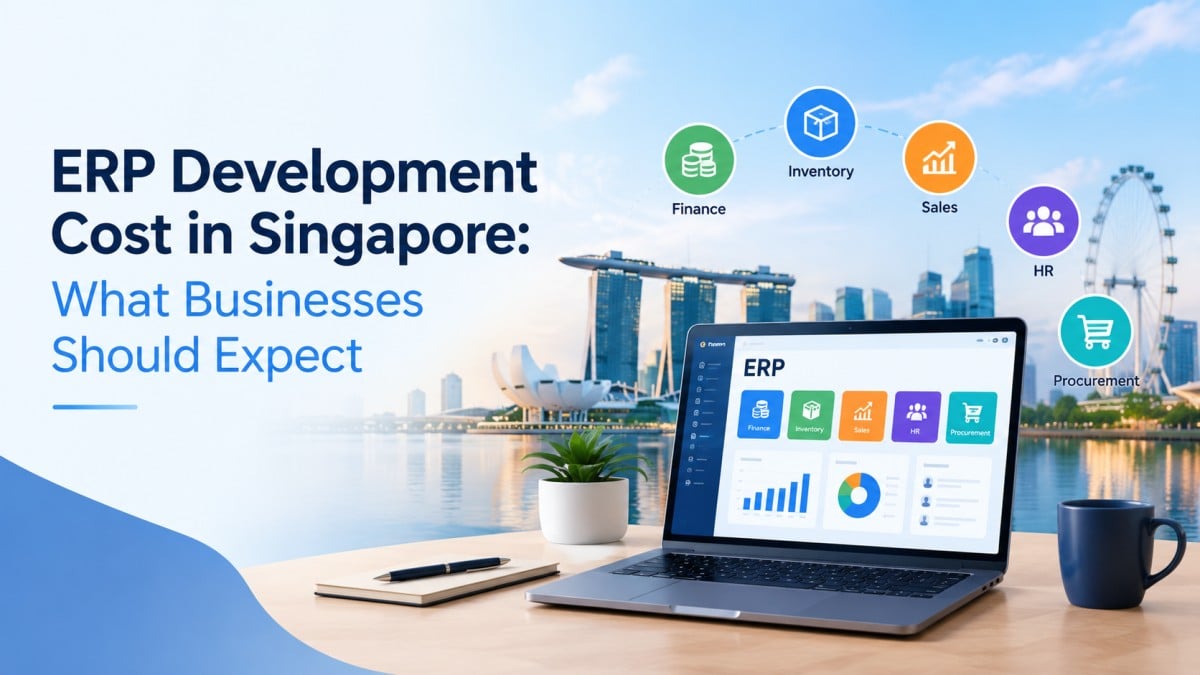
Businesses in Singapore increasingly seek ways to improve productivity, manage operations, and make better decisions with technology. Enterprise Resource Planning (ERP) software helps companies manage essential activities such as finance, inventory, sales, purchasing, and human resources through a connected system. However, the cost of building an ERP solution can vary significantly depending on business requirements, system complexity, and the features involved.
Understanding the factors that influence ERP development costs can help businesses plan their budgets and choose a suitable solution.
What Is ERP Development?
ERP development involves creating or customizing software that connects different business processes within a single platform. Instead of managing information across separate applications and spreadsheets, employees can access relevant data through an integrated system.
For companies considering ERP Development in Singapore, a solution can be designed around their industry, operational requirements, reporting needs, and future growth plans.
How Much Does ERP Development Cost in Singapore?
There is no fixed price for ERP development because every business has different requirements. The overall investment depends on the number of modules, customization level, integrations, security requirements, and development timeline.
The numbers below are illustrative planning ranges, not validated market averages or vendor quotes.
- Basic ERP system: SGD 10,000–30,000 for a limited set of features and straightforward workflows.
- Mid-level ERP solution: SGD 30,000–100,000 for multiple business modules, customized workflows, and selected integrations.
- Advanced ERP platform: SGD 100,000–300,000 or more for complex operations, extensive customization, multiple integrations, and advanced reporting.
Actual costs may fall outside these ranges. Businesses should request detailed proposals based on their specific needs before making a decision.
What Factors Affect ERP Development Costs?
1. Business Requirements and Software Complexity
A system built for a small firm with minimal inventory and accounting requirements is typically less expensive than a solution that supports several departments, locations, and sophisticated processes. Clearly defined requirements help developers estimate the project more accurately.
2. Features and Modules
The number and type of modules directly influence development effort. Common ERP modules include:
- Finance and accounting
- Inventory and warehouse management
- Sales and customer management
- Procurement and purchasing
- Human resource management
- Reporting and analytics
Businesses can start with essential modules and add more functionality as their needs evolve.
3. Customization and Integrations
Standard features may be sufficient for some companies, while others need customized approval processes, dashboards, or industry-specific functionality.
Integrating ERP software with existing accounting platforms, e-commerce systems, payment gateways, or CRM tools can also increase development costs. The complexity and reliability of these integrations should be considered during planning.
4. Data Migration and Security
Moving information from spreadsheets or legacy systems into a new ERP platform requires data cleaning, mapping, testing, and validation. Businesses may also need role-based access controls, audit logs, encryption, and backup procedures to protect sensitive information.
5. Testing, Deployment, and Training
An ERP system must be tested before launch to identify errors and ensure that business processes work correctly. Deployment, employee training, documentation, and post-launch support also contribute to the total project cost.
Custom ERP Development vs. Ready-Made Software
Ready-made ERP software can be suitable for businesses that need standard functionality and want to begin quickly. Depending on the provider, costs may include subscriptions, user licences, implementation, and additional modules.
Custom ERP development is designed around specific business processes. It may require a larger initial investment, but it can provide greater control over functionality and future enhancements.
The right choice depends on your budget, operational complexity, customization needs, and long-term plans.
How Do Businesses Manage ERP Development Costs?
Companies can control their investment by defining clear project goals, prioritizing essential features, and avoiding unnecessary customization. Starting with a minimally feasible system and increasing in stages can help spread expenses over time.
It is also important to evaluate maintenance, hosting, upgrades, training, and technical support rather than focusing only on the initial development price.
Conclusion
ERP development is a strategic investment that can help Singapore businesses streamline operations, improve data visibility, and reduce manual work. The total cost depends on system complexity, required modules, integrations, security, and ongoing support.
Before starting ERP Development in Singapore, identify your business priorities, compare suitable solutions, and request a transparent cost breakdown from experienced developers. Careful planning can help you select an ERP system that meets your current needs while supporting future growth.